

1
The buyer starts checkout
They pick a vehicle, add accessories and protection, enter their details, verify their identity with a selfie and government ID, and choose delivery or pickup at your store.
2
Financing, F&I, and payment
They apply for financing across multiple lenders, compare real offers, add protection products, and pay. All in one flow, without leaving to fill in a separate credit application.
3
Compliance and signing
Ekho generates the state-specific contracts, collects signatures in whatever form that state requires, and handles titling, registration, and taxes.
4
Fulfillment and payout
You prep the vehicle and deliver it or hand it over. Ekho pays out to your bank account. No manual paperwork, no DMV run.
What your team actually does
Most of the sale runs itself. Your team’s work shows up as action items on the order: countersigning documents, adding a temp tag, confirming an odometer reading.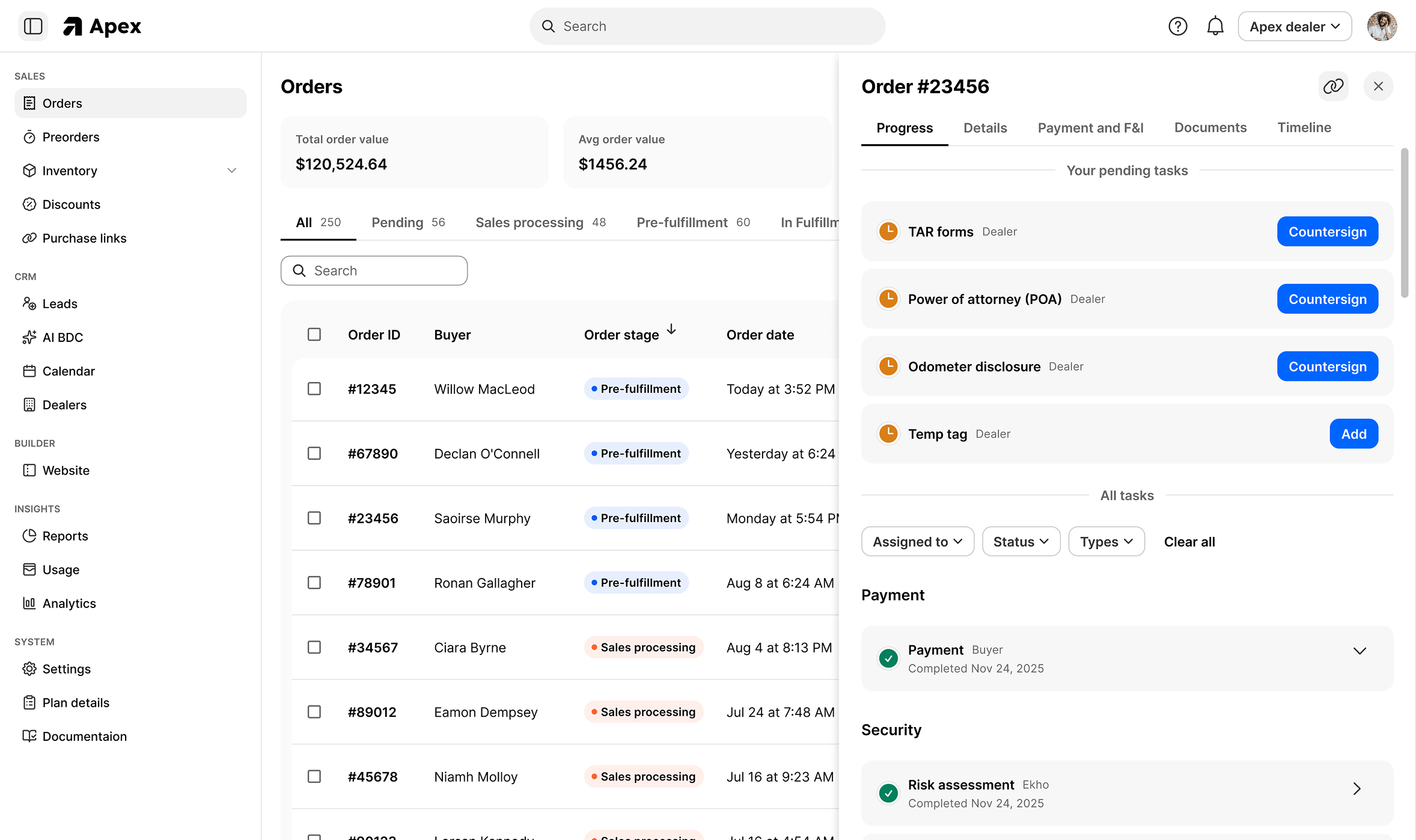
Your pending tasks sit on the order, so nothing depends on someone remembering.
Where the buyer is during all this
After checkout, the buyer moves into the buyer portal, which walks them through their remaining steps: signing off, financing, registration details, protection, payment, and paperwork.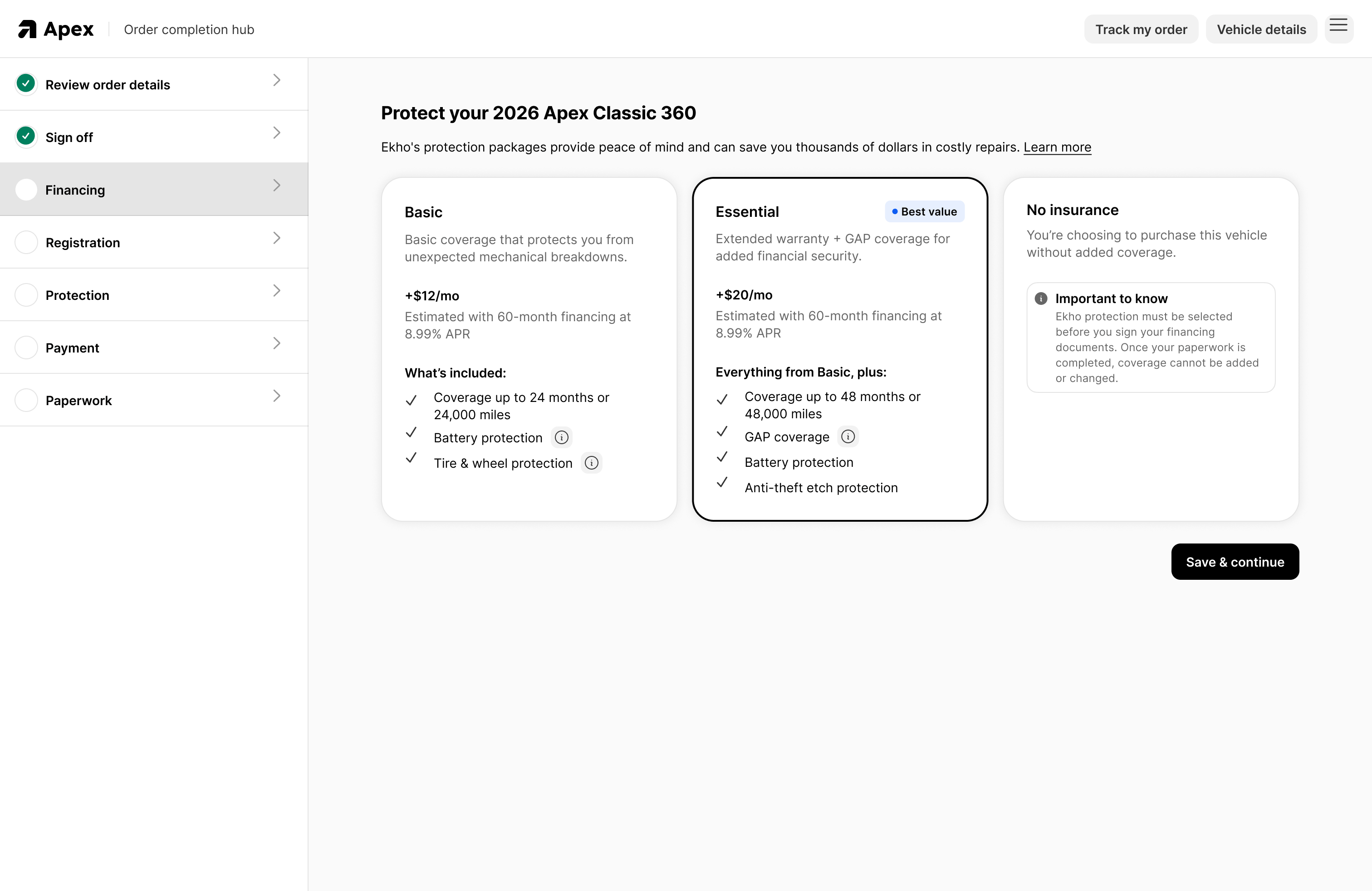
The buyer works through their own checklist without calling you for status.