

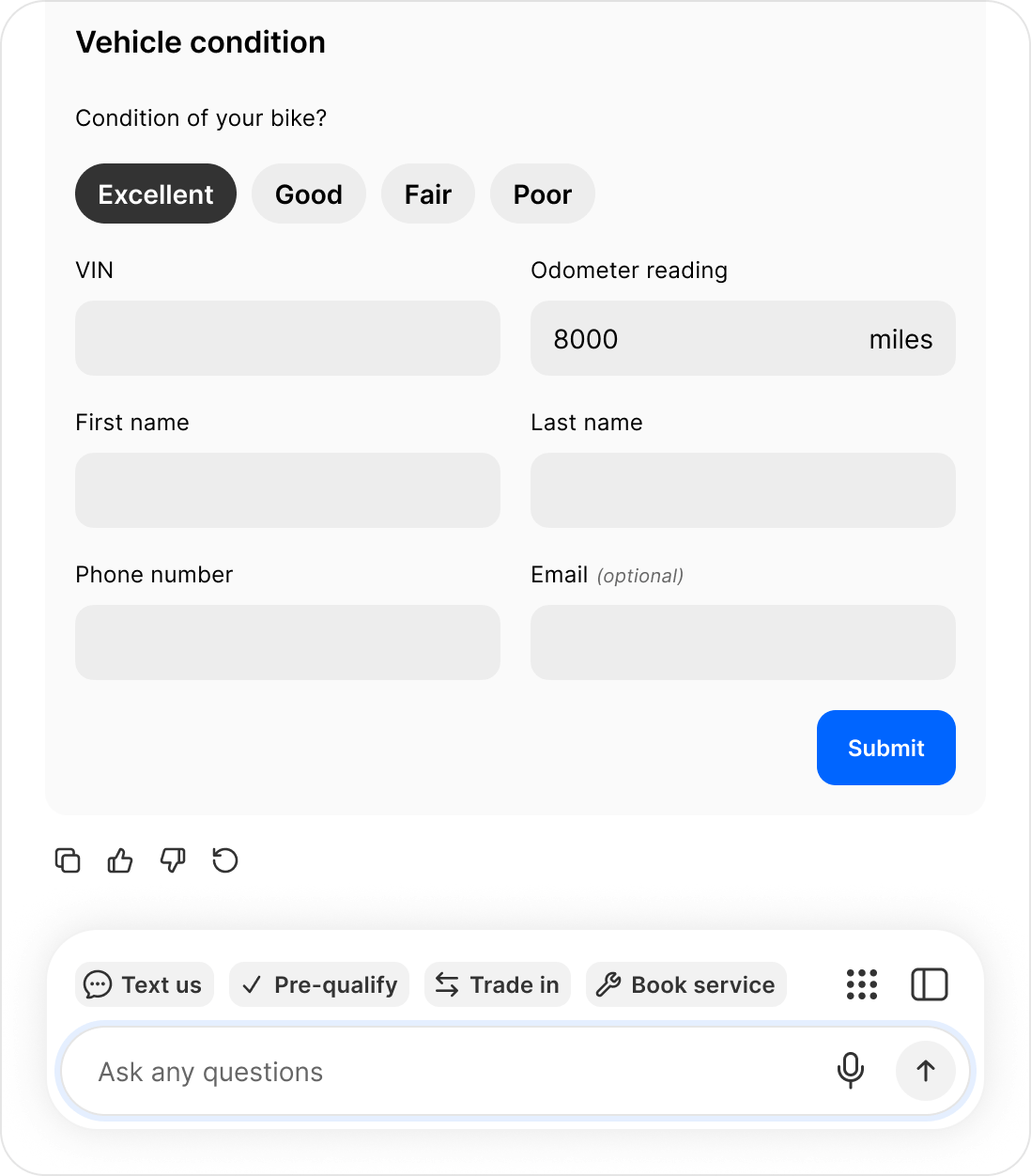
The agent collects condition, VIN, and mileage, then returns an estimate.
What it asks for
- Condition — Excellent, Good, Fair, or Poor
- VIN
- Odometer reading
- Contact details — name, phone, and optionally email
Why it matters for your team
A trade-in estimate is one of the strongest qualification signals you can get. It tells you the buyer is serious, and it gives your rep a number to work from before the buyer walks in. The valuation and the vehicle details land on the lead, so whoever picks it up sees the trade context alongside the rest of the conversation.The estimate is a market-based indication to move the conversation forward, not a committed offer. Your team confirms the final number after inspecting the vehicle.
Where trade-ins show up
Review trade details on the lead.